A line, a pause, a living rhythm
Learning to see calligraphy, even before learning to read it.
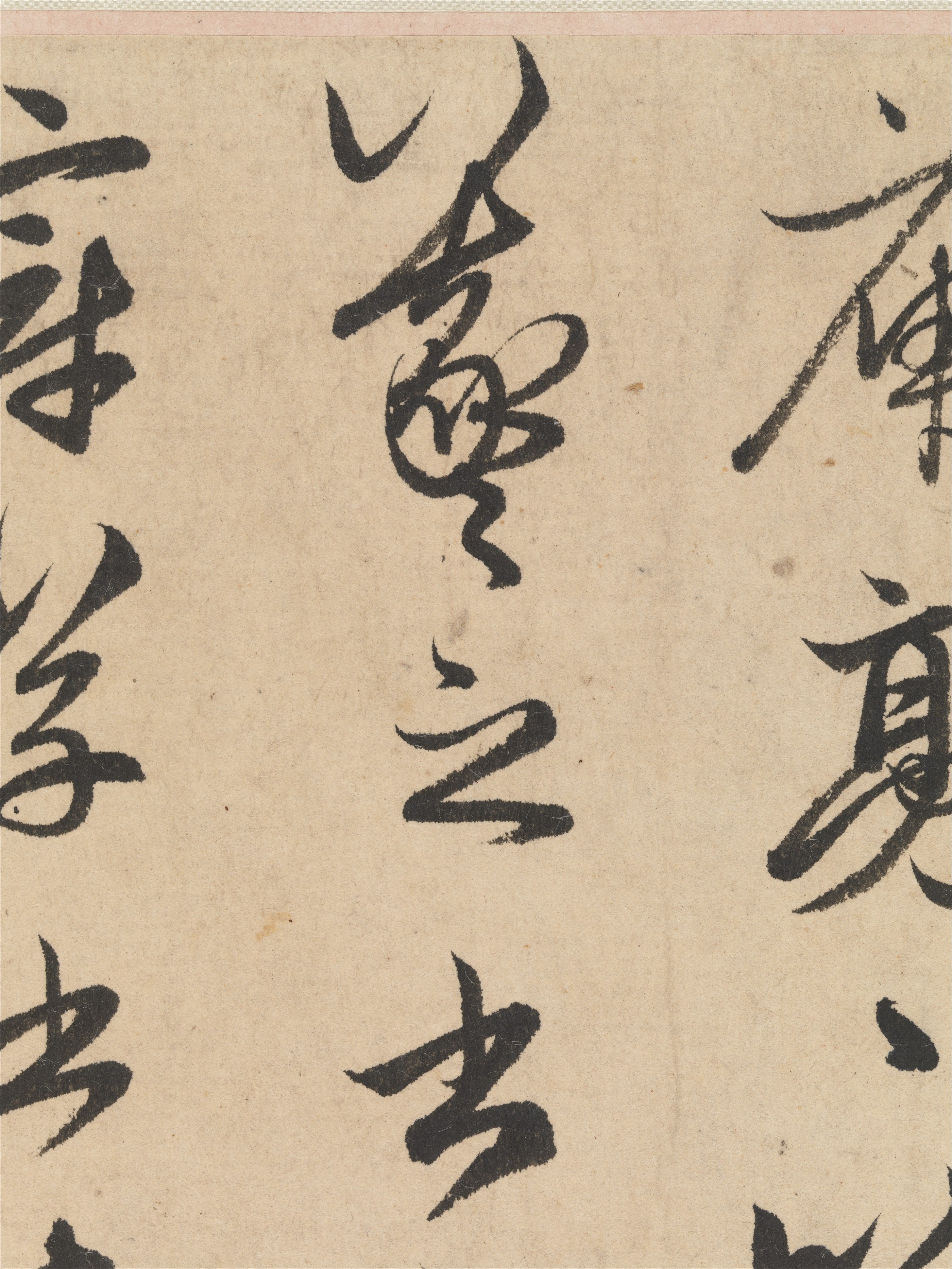
Zhao Mengfu, Four Anecdotes from the Life of Wang Xizhi (detail), 1310s. The Metropolitan Museum of Art ↗
Follow the movement
You do not need to read every character to begin looking at calligraphy. Notice where a line gathers weight, where it becomes fine, and how a stroke relates to the open paper around it. These visible differences can suggest movement without telling us exactly how a hand moved.
Between marks
In this work catalogued by the Metropolitan Museum of Art under Zhao Mengfu, try comparing the rhythm within a character with the spacing between characters. Writing is both language and a visual arrangement. Neither aspect cancels the other.
The museum record is the starting point for attribution and identification. This short reading concentrates on visual attention; it does not offer a transcription or translation of the inscription.
Sources & further reading
About this image+
- Image attribution
- Zhao Mengfu, Four Anecdotes from the Life of Wang Xizhi, 1310s (detail). The Metropolitan Museum of Art, Bequest of John M. Crawford Jr., 1988. 1989.363.30. Public Domain / CC0.
- License
- CC0 ↗
- Source
- The Metropolitan Museum of Art ↗