
New to Chinese art?
Three ways to begin: follow a landscape, look closely at a line, and meet the artist behind the work.
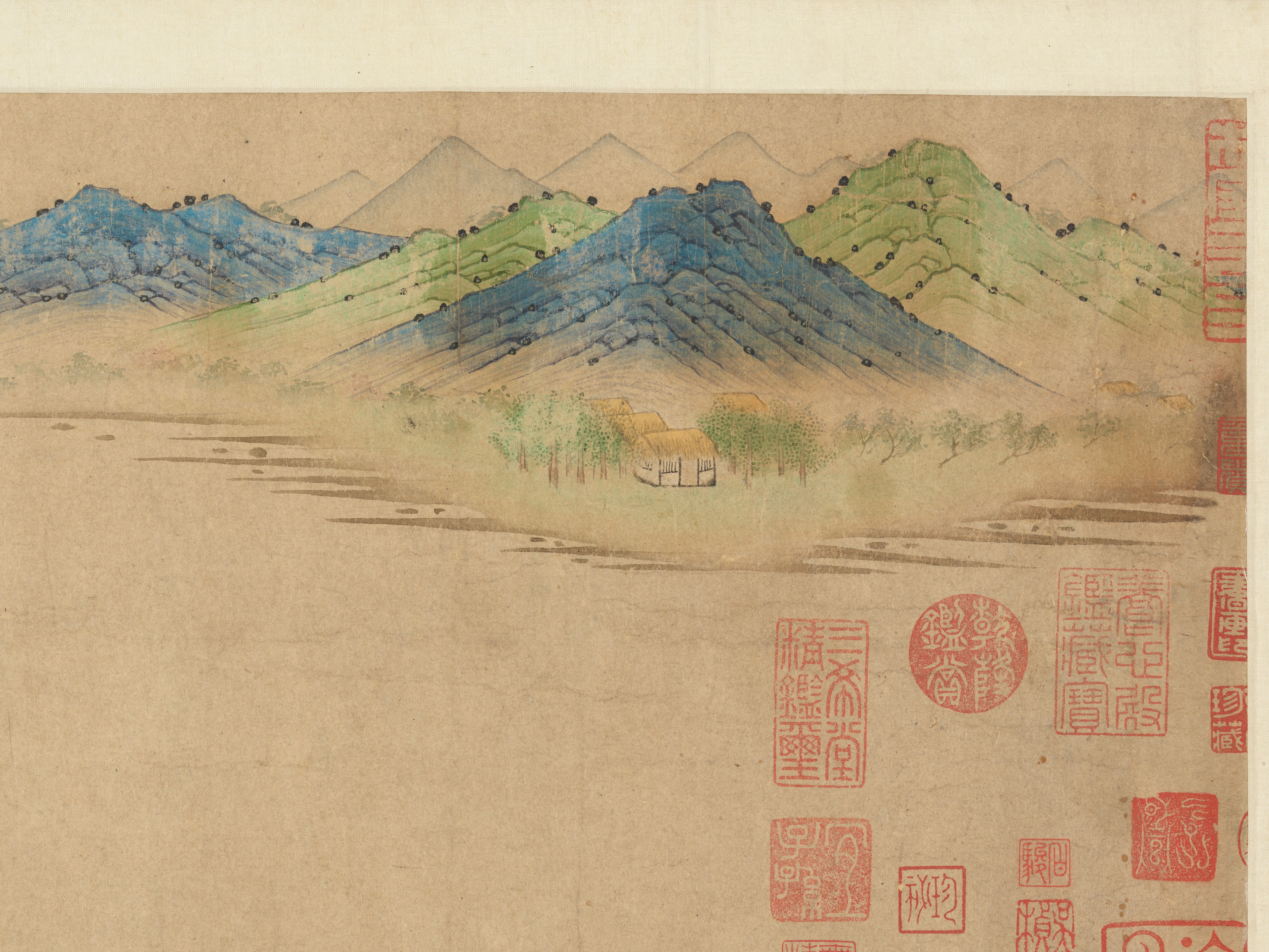
Qian Xuan, Wang Xizhi Watching Geese (detail), c. 1295. The Metropolitan Museum of Art ↗
01
Let a landscape unfold
Start with the water in Qian Xuan’s painting. Find one figure, then trace a route from that figure into the landscape. Where can your eye travel, and where does it pause? A handscroll is traditionally opened from right to left, a section at a time. Try the scroll view, then compare the small human presence with the whole scene.
Explore Qian Xuan’s handscroll ↗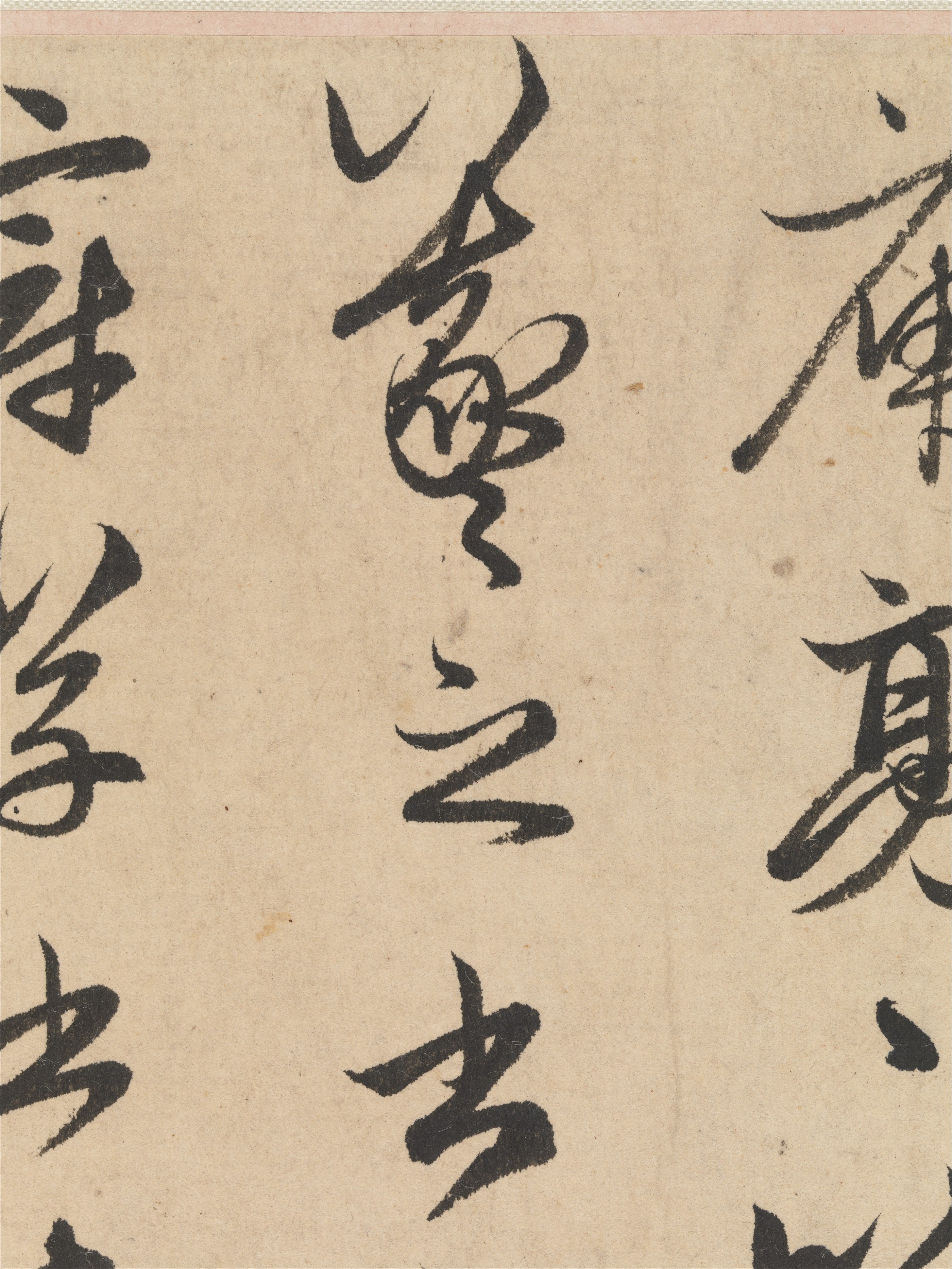
Zhao Mengfu, Four Anecdotes from the Life of Wang Xizhi (detail), 1310s. The Metropolitan Museum of Art ↗
02
See the space around a line
Choose two characters in Zhao Mengfu’s calligraphy. Compare the weight of the strokes and the spaces inside them. Then step back to see the columns. Brush pressure, ink and movement shape a line; the written text also carries meaning. Looking can begin before you can read the words, but it is an invitation to learn what they say.
Look closely at Zhao Mengfu’s calligraphy ↗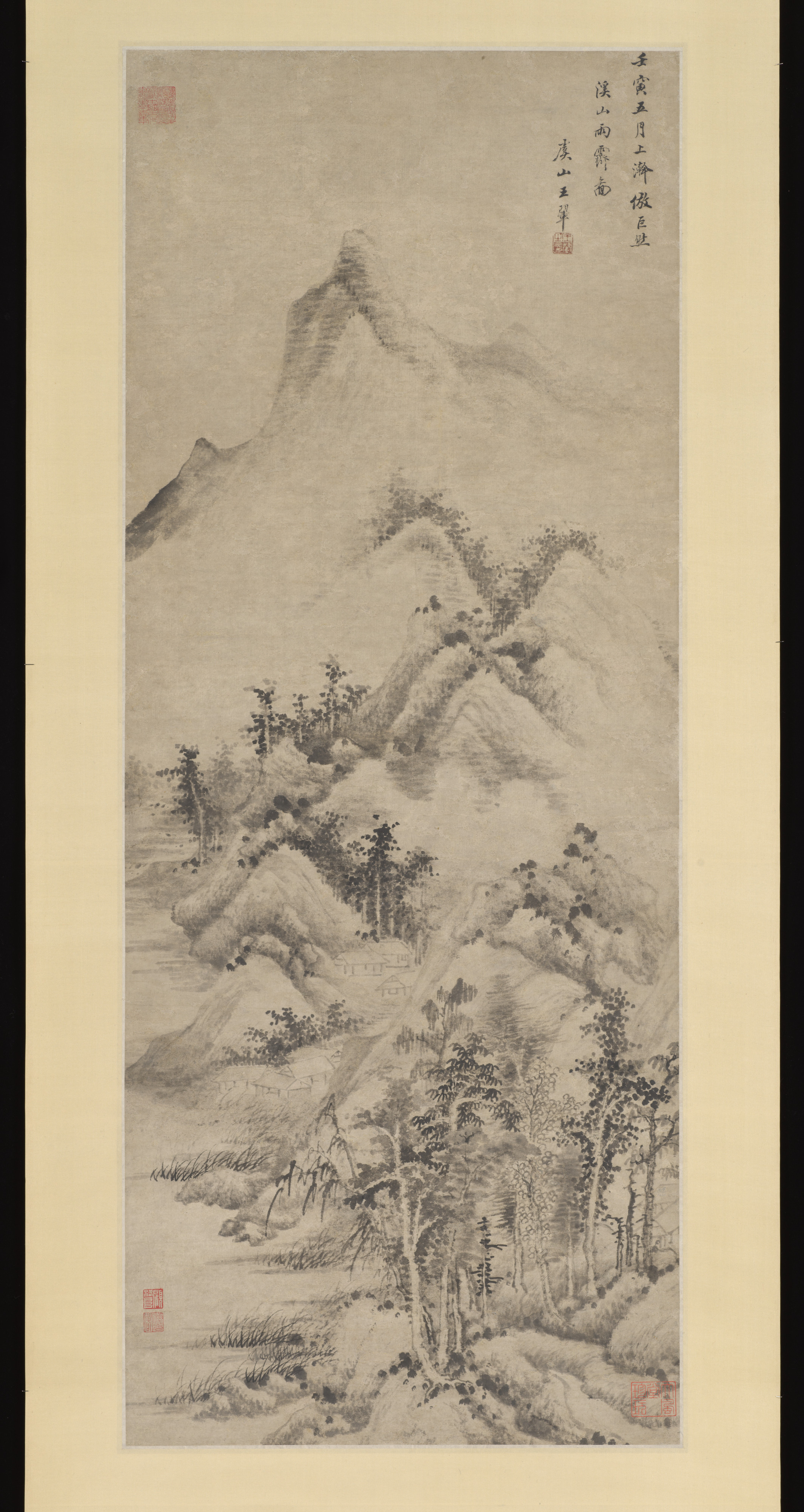
Wang Hui, Clearing after Rain over Streams and Mountains, 1662. The Metropolitan Museum of Art ↗
03
Meet an artist in their time
A dynasty is a useful point on a timeline, not a complete explanation of a painting. Begin with an artist’s life dates and the date of one work. Some lives cross a change of dynasty; later painters may also return to much earlier styles. Read the biography, look at its sources, and come back to the work with one new question.
Browse artists through time ↗A small dictionary of Chinese art
Useful words for looking, reading and finding your way through a museum catalogue.
Keep exploring ↗